
Course Video Outline Template
Published Aug 3, 2026 By Xinwei
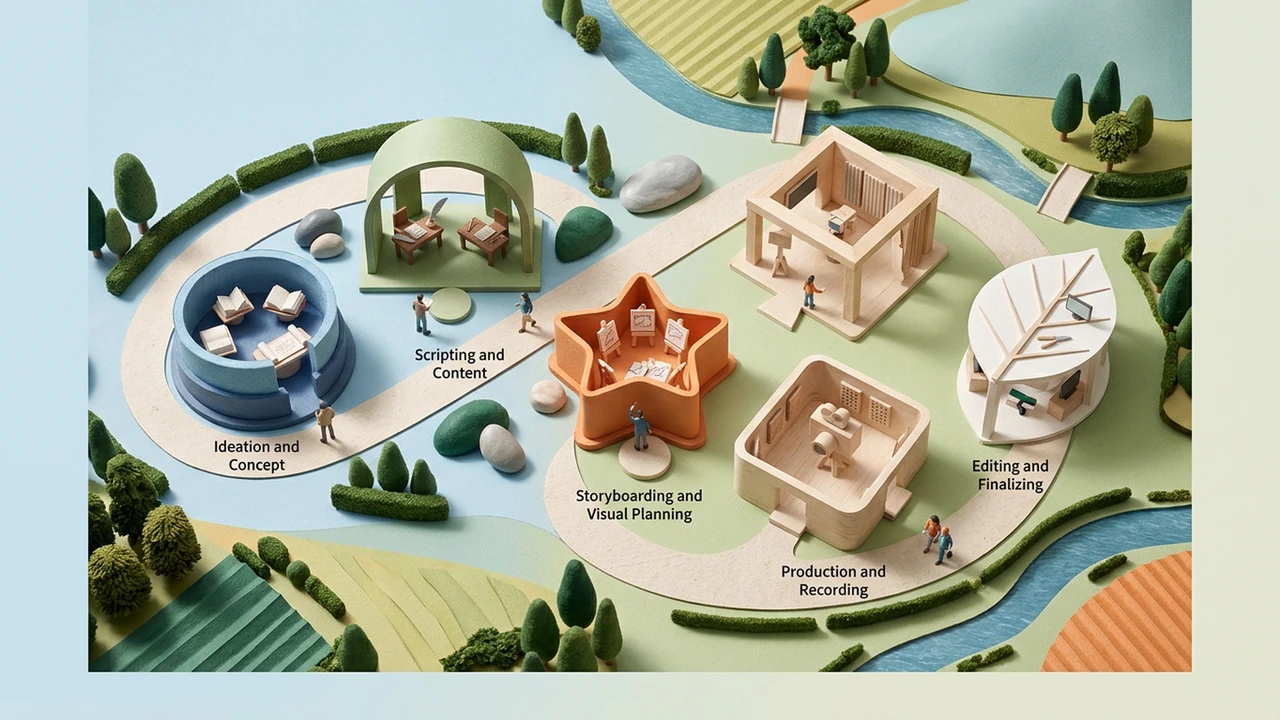
A course video sequence needs more than a list of topics. It needs a learner outcome, a progression of questions, examples, practice points, and a place to return for source material.
Organise videos around learner questions
Use one course video for one connected learner question. A sequence should progress from orientation to concept, example, practice, and recap rather than simply divide a long source by page count.
Copy this course video outline
| Video | Learner question | Source material | Visible example | Practice or next action |
|---|---|---|---|---|
| 1. Orientation | Why does this topic matter? | Syllabus or opening brief | Context map | Choose a goal |
| 2. Core concept | What relationship must I understand? | Chapter, diagram, or notes | One comparison | Explain it back |
| 3. Worked example | How does it apply? | Example set or case | Step-by-step path | Try a variation |
| 4. Decision or exception | What changes the normal route? | Guide or policy note | Contrast or branch | Select a route |
| 5. Recap | What should I retain and use next? | Course summary | Connected map | Continue to source or practice |
Add the information that keeps the sequence usable
- Learner level and prerequisite knowledge
- One outcome per video
- A source section or asset that supports each explanation
- A visible example, relationship, or decision for each video
- A practice prompt or next learning action
- An owner for updates when the source changes
Do not let the outline become a lecture transcript
If a section cannot be shown, compared, or practised, it may belong in reading material rather than a separate video. Keep the course outline, handouts, references, and assessment logic available alongside the video sequence.
See the exposure-triangle course case for a focused example of a source-led learning path. Start from a course outline when the learner questions are ready.
Source-backed cases
See how this task becomes a video
FAQ