
설명 비디오 스크립트 vs. 스토리보드
출판 2026년 8월 3일 에 의해 Xinwei
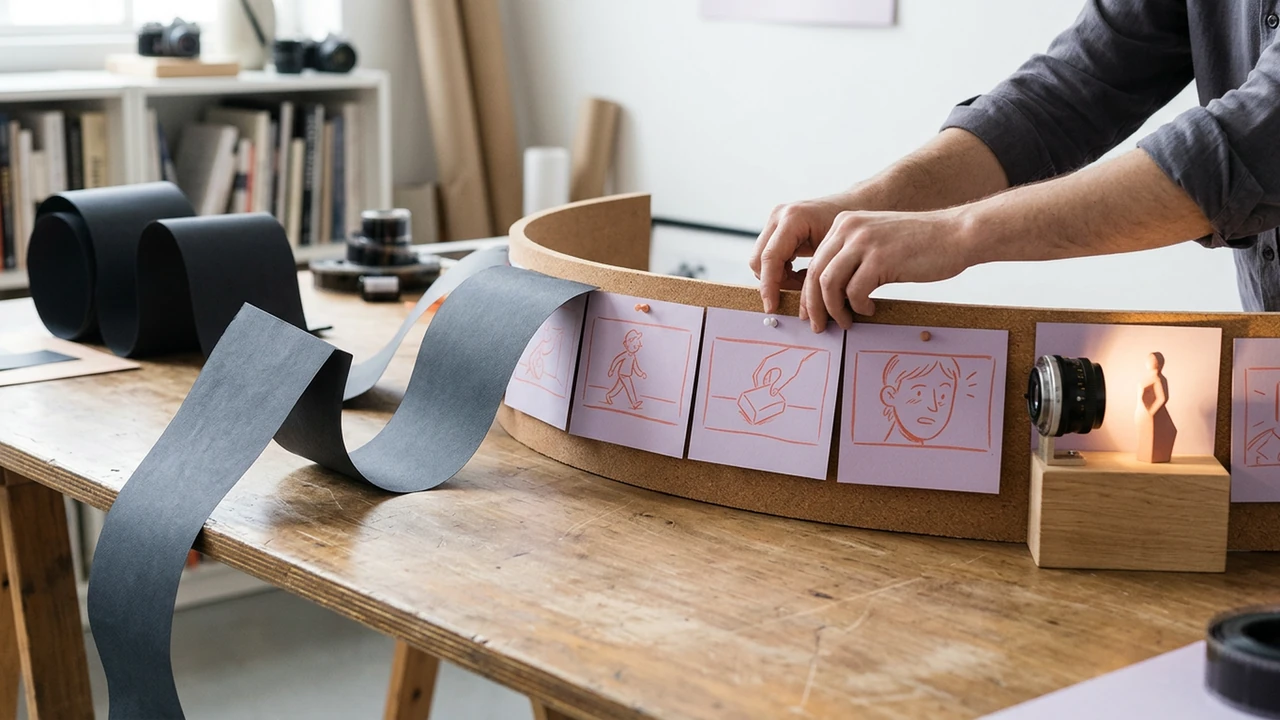
스크립트는 아이디어를 말로 설명합니다. 스토리보드는 청중이 해당 단어가 의존하는 관계, 순서 또는 대조를 볼 수 있는지 테스트합니다. 강력한 설명자는 두 가지를 모두 사용합니다.
Give each planning artefact a different job
Write the script to define the viewer question, source-backed claim, sequence, and next action. Build the storyboard to decide what the viewer will actually see at each beat. Do not use a storyboard as a decorative slide list.
| Put this in the script | Put this in the storyboard |
|---|---|
| Viewer question and audience | What appears first and why |
| Source-supported wording and terms | Diagram, comparison, object, state, or transition that makes it visible |
| Narration order and decision boundary | What changes between beats |
| Next action and source reference | What the viewer should be able to recognise before moving on |
Copy this script-to-storyboard handoff
- Viewer question: ______________________________
- Source that supports the answer: ______________________________
- Narration beat: ______________________________
- Visual evidence: ______________________________
- What changes on screen: ______________________________
- Check or decision the viewer should recognise: ______________________________
- Next source or action: ______________________________
Use the deletion test
If a visual does not reveal a relationship, sequence, comparison, state, or relevant object, remove it. If a narration sentence has no visual evidence, decide whether it belongs in the source document instead. This keeps the finished explanation from becoming a narrated document.
Use the technical explainer script template for a source-led structure, or see the IT incident triage case for a visual decision path. Start from a script when the viewer question is settled.
출처 지원 사례
이 작업이 어떻게 비디오가 되는지 확인하십시오.
FAQ