강좌 영상 개요 템플릿
출판 2026년 8월 3일 에 의해 Xinwei
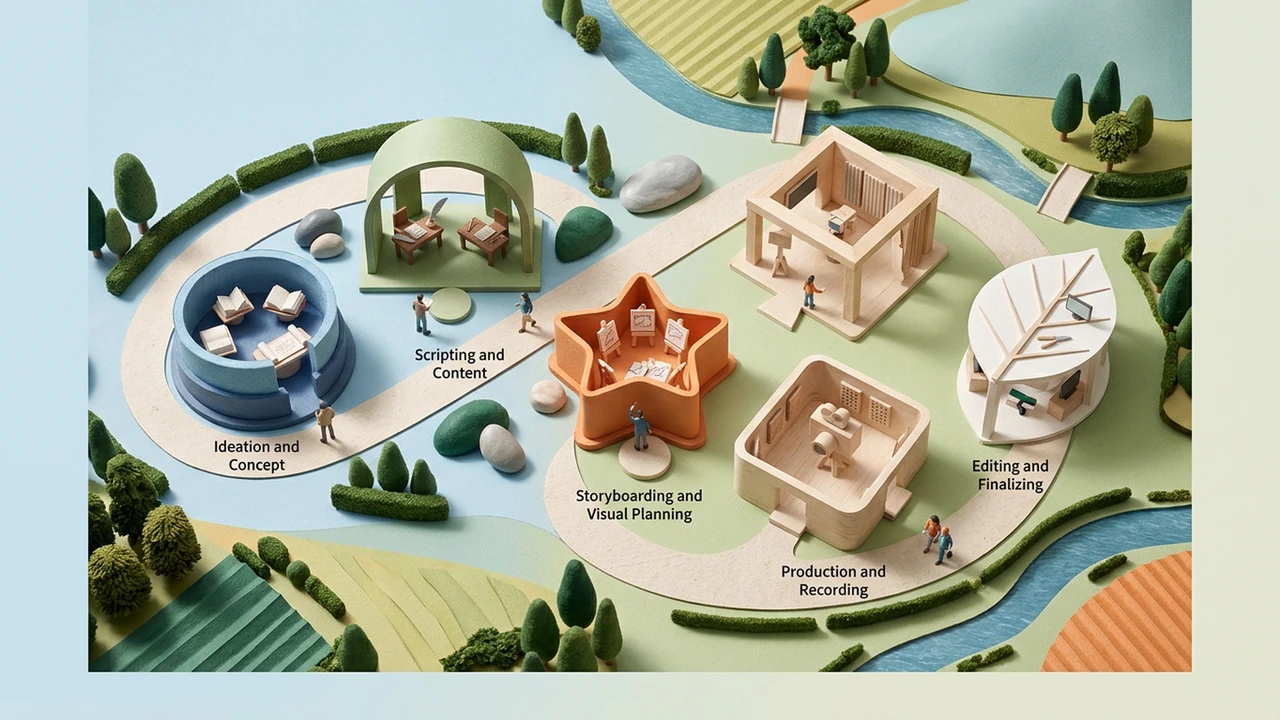
강좌 비디오 시퀀스에는 주제 목록 이상의 것이 필요합니다. 학습자의 결과, 질문의 진행, 예시, 연습 포인트, 원본 자료를 반환할 장소가 필요합니다.
Organise videos around learner questions
Use one course video for one connected learner question. A sequence should progress from orientation to concept, example, practice, and recap rather than simply divide a long source by page count.
Copy this course video outline
| Video | Learner question | Source material | Visible example | Practice or next action |
|---|---|---|---|---|
| 1. Orientation | Why does this topic matter? | Syllabus or opening brief | Context map | Choose a goal |
| 2. Core concept | What relationship must I understand? | Chapter, diagram, or notes | One comparison | Explain it back |
| 3. Worked example | How does it apply? | Example set or case | Step-by-step path | Try a variation |
| 4. Decision or exception | What changes the normal route? | Guide or policy note | Contrast or branch | Select a route |
| 5. Recap | What should I retain and use next? | Course summary | Connected map | Continue to source or practice |
Add the information that keeps the sequence usable
- Learner level and prerequisite knowledge
- One outcome per video
- A source section or asset that supports each explanation
- A visible example, relationship, or decision for each video
- A practice prompt or next learning action
- An owner for updates when the source changes
Do not let the outline become a lecture transcript
If a section cannot be shown, compared, or practised, it may belong in reading material rather than a separate video. Keep the course outline, handouts, references, and assessment logic available alongside the video sequence.
See the exposure-triangle course case for a focused example of a source-led learning path. Start from a course outline when the learner questions are ready.
출처 지원 사례
이 작업이 어떻게 비디오가 되는지 확인하십시오.
FAQ