ビデオスクリプト vs. ストーリーボード
出版 2026年8月3日 によって Xinwei
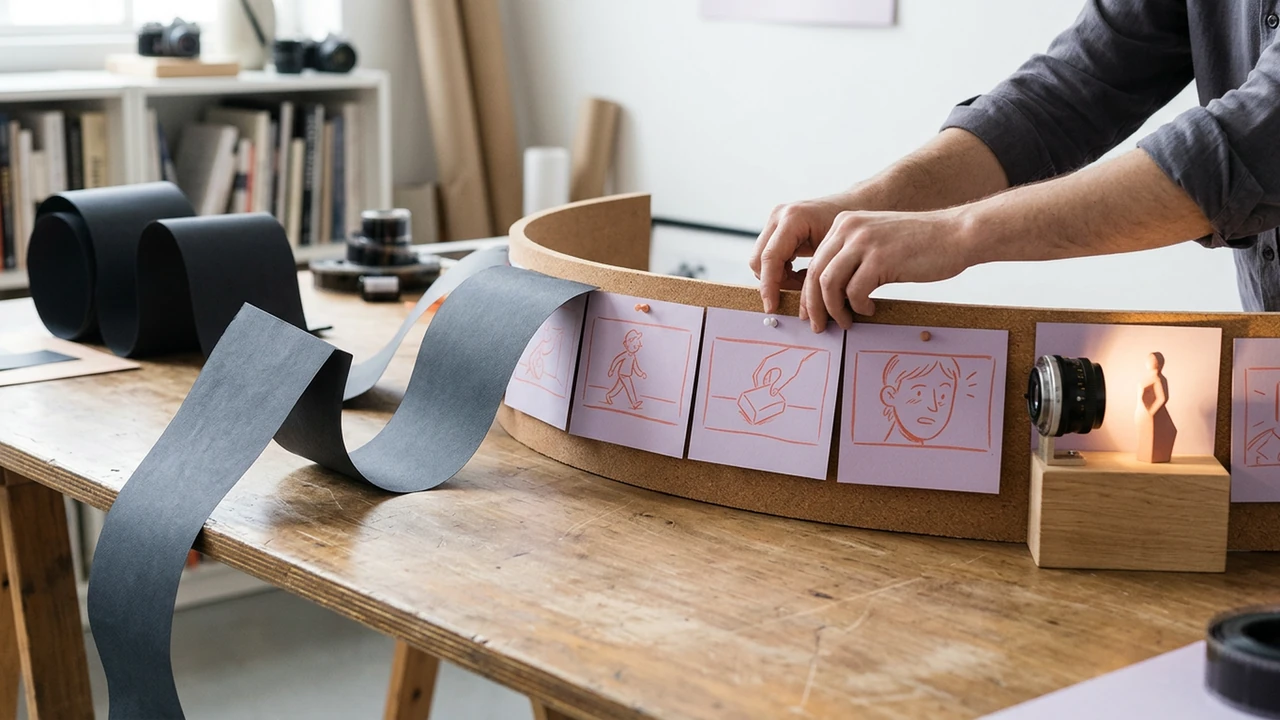
脚本は、アイデアを言葉で説明します。 ストーリーボードは、観客がその言葉の関係、順序、または対照を見ることができるかどうかをテストします。 強力な説明者が両方を用いる。
Give each planning artefact a different job
Write the script to define the viewer question, source-backed claim, sequence, and next action. Build the storyboard to decide what the viewer will actually see at each beat. Do not use a storyboard as a decorative slide list.
| Put this in the script | Put this in the storyboard |
|---|---|
| Viewer question and audience | What appears first and why |
| Source-supported wording and terms | Diagram, comparison, object, state, or transition that makes it visible |
| Narration order and decision boundary | What changes between beats |
| Next action and source reference | What the viewer should be able to recognise before moving on |
Copy this script-to-storyboard handoff
- Viewer question: ______________________________
- Source that supports the answer: ______________________________
- Narration beat: ______________________________
- Visual evidence: ______________________________
- What changes on screen: ______________________________
- Check or decision the viewer should recognise: ______________________________
- Next source or action: ______________________________
Use the deletion test
If a visual does not reveal a relationship, sequence, comparison, state, or relevant object, remove it. If a narration sentence has no visual evidence, decide whether it belongs in the source document instead. This keeps the finished explanation from becoming a narrated document.
Use the technical explainer script template for a source-led structure, or see the IT incident triage case for a visual decision path. Start from a script when the viewer question is settled.
ソースサポートケース
このタスクがビデオになる方法を見る
FAQ